
Norman County Criminal Court Records
A Norman County criminal court record begins when a criminal charge, citation, complaint, warrant, or summons is filed in District Court. The County Attorney is the chief prosecutor for crimes and juvenile offenses in Norman County, while Court Administration maintains the official criminal court record. The court file can show the complaint or citation, charge list, warrant or summons history, plea, hearing events, orders, disposition, sentence, fines, fees, restitution, probation terms, and Register of Actions entries.
The Norman County Attorney source identifies the local prosecution office that reviews law-enforcement submissions and makes charging decisions.
The prosecutor's role matters because a police report or arrest does not become the court charge record until the case is filed with the court.
Norman County criminal cases are handled in Norman County District Court, part of Minnesota's Ninth Judicial District. Minnesota does not use a separate county court, justice court, or municipal court for ordinary Norman County criminal case files. Appeals from District Court generally go to the Minnesota Court of Appeals. The full case file belongs in Norman County court records, while the charging side is treated more narrowly in Norman County arrest records and charges.
Search Norman County Criminal Records
The main court case lookup is Minnesota Court Records Online. MCRO covers Minnesota district trial courts, including Norman County District Court. Case Search accepts name, case number, citation number, and attorney searches. It can be filtered by county, filing date, case category, and status. For pending criminal, traffic, and petty misdemeanor matters with no conviction, MCRO warns that defendant-name searches may not return the case. Search by case number or citation number when possible.
- Open MCRO and accept the terms of use.
- Select Case Search for the criminal case file or Hearing Search for a court date.
- Choose specific county court locations and select Norman County.
- Use a case number or citation number when available, especially for pending no-conviction cases.
- Open the case detail and read the Register of Actions, charge entries, hearings, disposition, and sentencing information.
- Request certified criminal court copies from Norman County Court Administration when a legal copy is needed.
MCRO should not be used as the official background-check source. The official public criminal-history channel is the Minnesota BCA Criminal History Search, tied to criminal-history data rules. MCRO is useful for case details, but BCA is the research-documented statewide criminal-history route.
The BCA Criminal History Search source is the statewide public criminal-history channel for Minnesota.
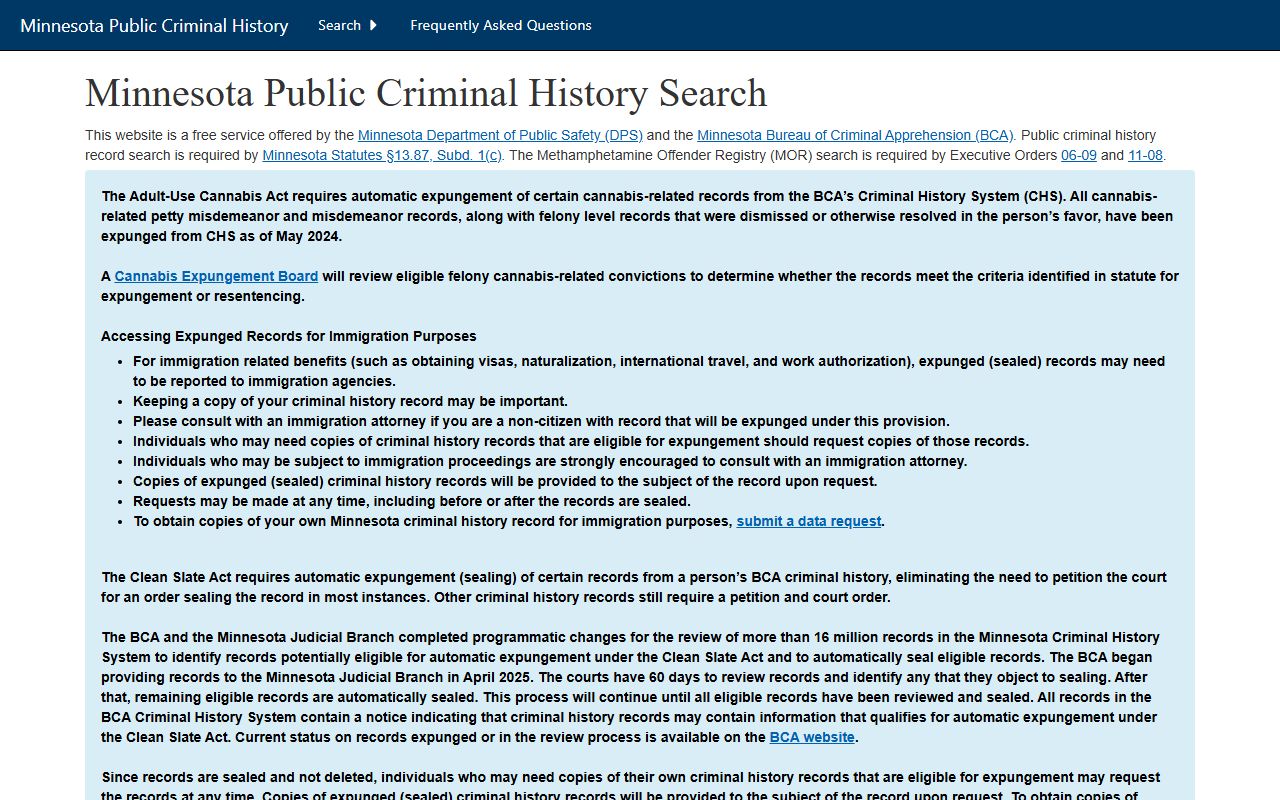
BCA results and court case records may answer different questions, so both sources should be understood before relying on a criminal-record search.
Norman County Criminal Case Flow
A criminal court record is built over time. Law enforcement investigates and sends reports to the County Attorney when review is needed. The County Attorney decides whether to file charges. Once a complaint, citation, or other charging document is filed, Court Administration opens or updates the District Court case. Later entries show hearings, motions, pleas, trial events, disposition, and sentence.
Case flow: Charges Filed › Arraignment › Pretrial / Motions › Plea or Trial › Disposition › Sentencing
| Stage | What Happens in the Record |
|---|---|
| Charges Filed | The complaint, citation, or charge entry identifies alleged offenses, statute references, severity level, and the filing court. |
| Arraignment | The defendant is advised of charges and rights, and a plea or future hearing path may be set. |
| Pretrial / Motions | The docket may show notices, motions, orders, continuances, warrants, or settlement conferences. |
| Plea or Trial | The record may show a guilty plea, not guilty plea, trial setting, verdict, or dismissal. |
| Disposition | The court records the outcome of each charge, such as guilty, dismissed, acquitted, or amended. |
| Sentencing | The file may show jail, prison, probation, fines, fees, restitution, conditions, or stayed terms. |
Norman County Criminal Record Fields
A Norman County criminal court record should be read field by field. The case number is the safest key for searches and copy requests. Court location ties the case to Norman County District Court and the Ninth Judicial District. Charge entries identify the alleged offense and may include statute references and severity levels such as felony, gross misdemeanor, misdemeanor, or petty misdemeanor. Later entries show whether the charge remains pending, was amended, was dismissed, or ended in conviction.
| Field | What It Shows |
|---|---|
| Case Number | The official District Court identifier needed for precise searching and certified copy requests. |
| Defendant | The person charged in the criminal case, subject to public access limits. |
| Prosecuting Agency | The office or authority filing the criminal charge, usually tied to the County Attorney for local prosecutions. |
| Charges | Offense name, statute citation, severity level, filing court, and status for each count. |
| Hearings | Dates, times, hearing types, judicial officer, and appearance history where public. |
| Plea | The defendant's formal response, such as guilty or not guilty. |
| Disposition | The final outcome of each charge or the case as a whole. |
| Sentence | Penalty terms, including jail or prison, probation, fines, fees, restitution, and conditions where public. |
| Register of Actions | The chronological docket log of filings, orders, notices, hearings, and judgments. |
Charges vs Convictions
A charge is an allegation filed in court. A conviction is a finding or plea of guilt entered by the court. Norman County criminal court records can show charges that were later dismissed, reduced, amended, or resolved without a conviction. That distinction is important for reading MCRO results, BCA results, and jail roster controlling-charge entries. A controlling charge on a custody roster is not the same as a final criminal court disposition.
| Issue | Charge | Conviction |
|---|---|---|
| Meaning | An accusation filed in court under a statute. | A guilty plea, guilty verdict, or finding of guilt accepted by the court. |
| Timing | Appears early in the criminal case. | Appears only after plea, verdict, or final finding. |
| Status Changes | Can be amended, reduced, dismissed, or dropped. | May lead to sentence, probation, fines, restitution, or later expungement review. |
| Search Impact | Pending no-conviction cases may not appear by defendant-name search in MCRO. | Convictions may appear in court records and public criminal-history channels unless restricted. |
The Minnesota criminal-history data source explains the public data framework behind statewide criminal-history dissemination.
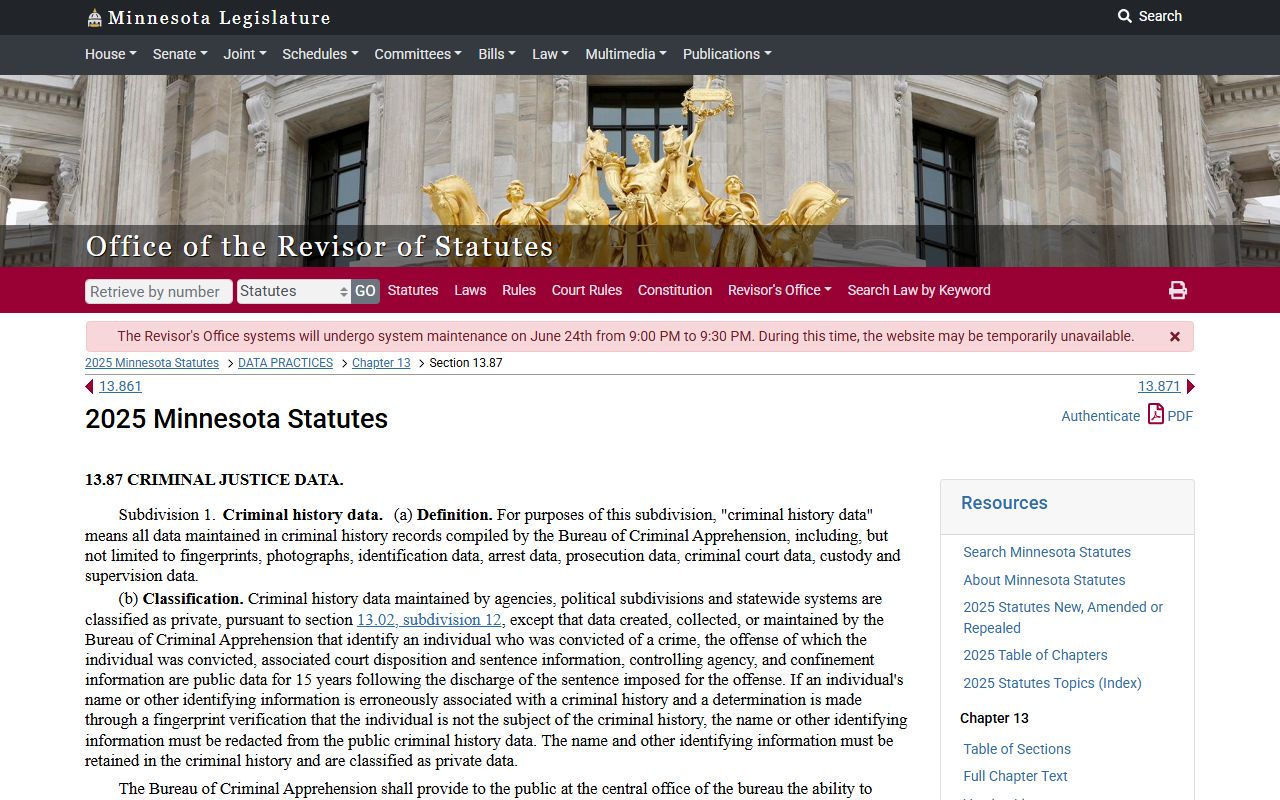
That statute is one reason a criminal-history search and a court case search should not be treated as identical records.
Read Dispositions and Sentences
"Disposition" means the final result of a charge or case. A Norman County criminal record may show guilty, dismissed, acquitted, amended, continued for dismissal, stayed, or other status wording depending on the court entry. "Sentence" is the penalty ordered after conviction. It may include jail or prison time, probation, fines, fees, restitution, community conditions, treatment conditions, or stayed execution of a sentence.
Bail and bond information may also appear. Minnesota Statutes 629.53 says bail money is deposited with and retained by the court administrator until final disposition and court order. That makes Court Administration relevant not only for the case record, but also for certain financial entries in the criminal case history.
The Norman County Victim Assistance Program source connects criminal proceedings with victim notices and criminal-justice support.
Victim notice duties are tied to criminal proceedings, so changes in hearings, disposition, and sentence can matter beyond the defendant and prosecutor.
Sealed vs Expunged Records
Some Norman County criminal court records stop appearing in public searches because they are sealed, expunged, confidential by rule, or outside MCRO remote access. Minnesota expungement is primarily governed by Chapter 609A. The Minnesota Attorney General describes expungement as a District Court order that prevents others from seeing a criminal conviction or arrest. It seals the record from public view, but it does not always erase the event for every statutory purpose.
| Issue | Sealed | Expunged |
|---|---|---|
| Public View | Hidden from ordinary public access under court order or rule. | Sealed from public view through the expungement process or qualifying automatic rules. |
| Underlying Event | The case or record still exists but is restricted. | The event is not necessarily vacated or erased for all legal purposes. |
| Who May Still See It | Courts, law enforcement, prosecutors, or authorized agencies may retain access in defined contexts. | Law enforcement, courts, licensing, and some employment contexts may still have statutory access. |
| Norman County Filing Venue | District Court / Court Administration handles court-record access questions. | Petitions are filed in District Court when a petition is needed. |
The Minnesota expungement chapter source governs many criminal-record sealing questions.
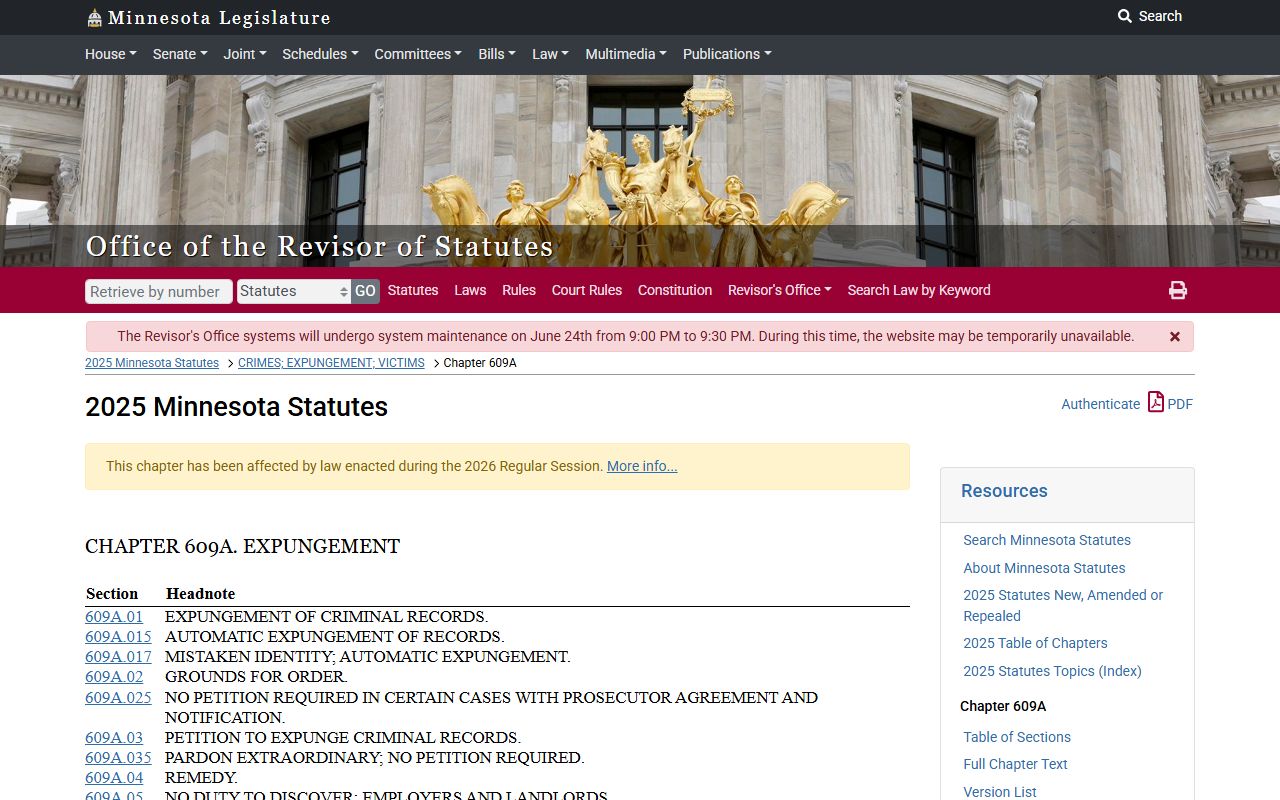
Expungement rules help explain why a case may disappear from ordinary public search while still existing for authorized users.
Norman County Criminal Access Rules
Criminal court access uses several overlapping rules. Court case records follow the Minnesota Rules of Public Access to Records of the Judicial Branch. County government data are guided by Minnesota Statutes Chapter 13. Public criminal-history dissemination is governed by Minnesota Statutes 13.87. MCRO terms also impose remote-access limits, so a record can be public at a courthouse terminal or through Court Administration but absent online.
Juvenile delinquency is a major limit. Most juvenile delinquency cases are not open to the public except certain serious cases involving children over age 16. Child Protection and Juvenile Delinquency Felony 16 case types are not available in MCRO. Domestic abuse and harassment restraining order case types are not displayed online because federal VAWA restrictions bar internet display. Public civil-commitment documents are not available in MCRO.
Key Access Point: MCRO is not certified, and official criminal court copies must come from Norman County Court Administration.
The Minnesota juvenile court records source sets key access rules for delinquency records.
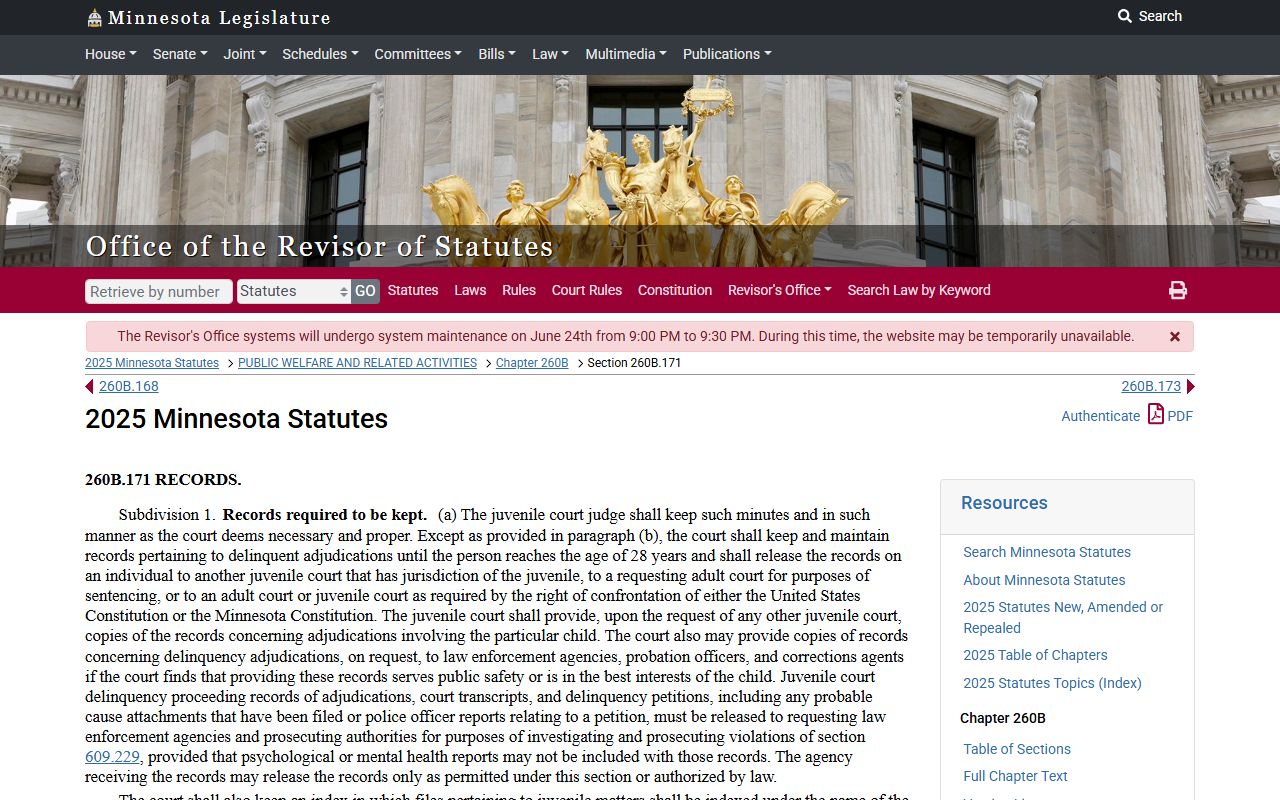
Juvenile access limits are a separate reason some criminal or charge-related information should not be treated as open adult case data.
Norman County Criminal Record Contacts
Use Court Administration for court case files, certified copies, hearing questions, and MCRO gaps. Use the County Attorney for prosecution-related public office information, not private legal advice. The County Attorney page says the office provides legal counsel to county government and serves as chief prosecutor, but the County Attorney and staff are not permitted to represent or provide legal advice to private citizens. A defendant seeking appointed counsel should ask the court about public defender application steps through the Ninth Judicial District process.
Court Administration / District Court Administrator
Norman County Courthouse
16 3rd Avenue E
Ada, MN 56510
(218) 415-7090
Monday-Friday, 8:00 a.m.-4:30 p.m.
Norman County Attorney
16 3rd Avenue E, Room 101B
Ada, MN 56510
(218) 784-5456
Chief prosecutor for crimes and juvenile offenses in Norman County.